
Waukesha Directory Runs on Record
The Huelsman Family Research Center has the clearest published inventory. It lists Waukesha city directories from 1858 and from 1890 to the present, but does not claim an unbroken annual run. The City historic survey confirms volumes used for 1929 through 1946, 1970 through 1973, 1981, and 2002.
| Collection | Years documented | Where held | Access |
|---|---|---|---|
| Waukesha city directories | 1858; 1890-present, with gaps possible | Huelsman Family Research Center | Appointment or remote research |
| Survey-cited editions | 1929-1946; 1970-1973; 1981; 2002 | Sources cited by City historic survey | Check edition with staff |
| Telephone books | Earliest Waukesha City book listed as 1917 | WCHSM | Appointment |
| Reverse directories | Complete run not published | WCHSM or Waukesha Public Library | Ask staff by year |
No verified publisher-by-publisher shelf list is available online. Confirm the exact year and edition before visiting.
Visit Waukesha Directory Archives
The Huelsman Family Research Center works by appointment on Wednesday mornings and Friday mornings and afternoons. Call 262-521-2859 ext. 225 or email waukeshamuseum@gmail.com. Members enter free; other sessions cost $20, students $5, and remote work is $20 per hour. Listed copy charges include $0.25 for standard black-and-white pages, $0.50 for oversized or color pages, and $5 per 75 PDF scans.
The captured archive holdings page shows the range beyond city directories.
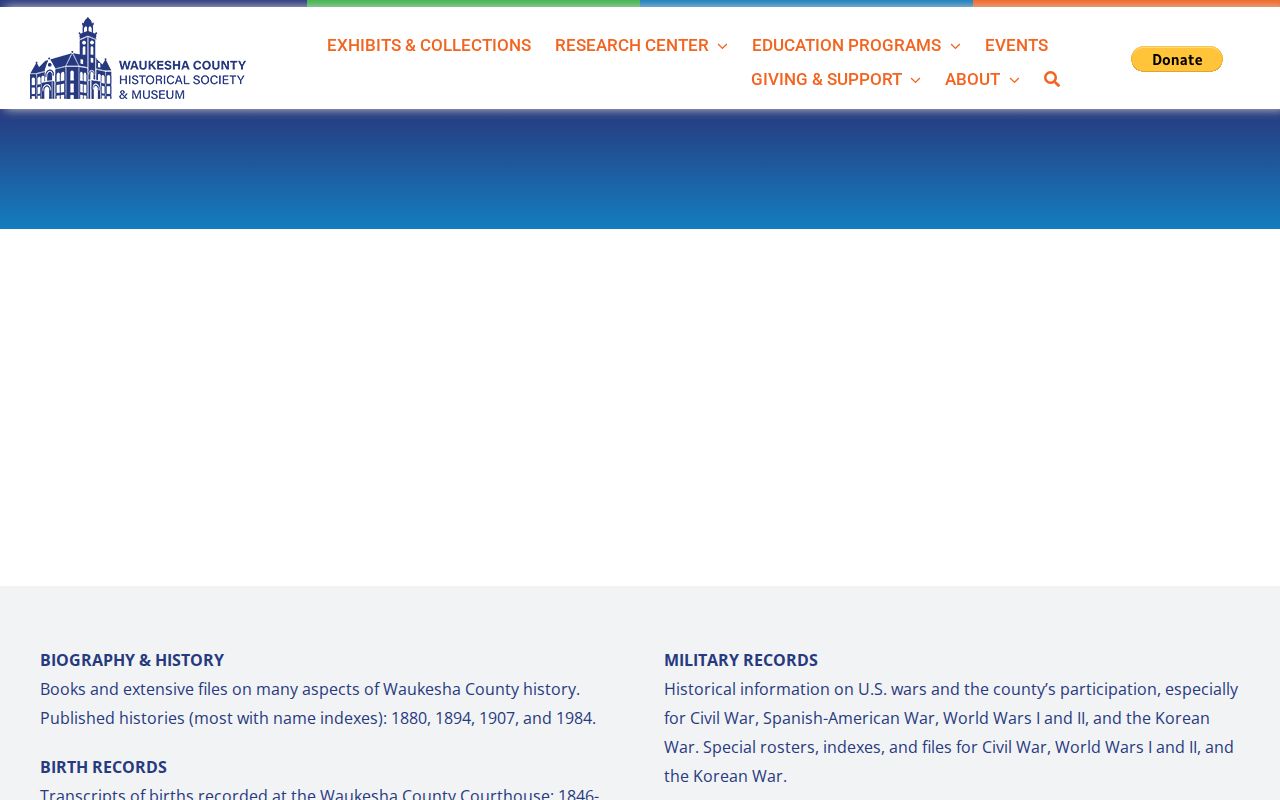
Ask staff for the exact directory year, publisher, reverse section, telephone book, and handling rules before the appointment.
Waukesha Library Directory Help
Waukesha Public Library, 321 Wisconsin Avenue, is the practical first stop when the needed volume is unclear. Adult Reference is 262-524-3682. Hours listed in the research are Monday through Thursday, 9:00 a.m. to 8:30 p.m.; Friday until 6:00 p.m.; Saturday until 5:00 p.m.; and Sunday closed.
The library offers Waukesha Freeman coverage from June 2000 to the current date, Milwaukee Journal Sentinel coverage from 1884 to the current date, HeritageHub notices from 1704 to the current date, and enhanced FamilySearch access inside this affiliate library.
The manifest capture of the library databases shows the online research choices.
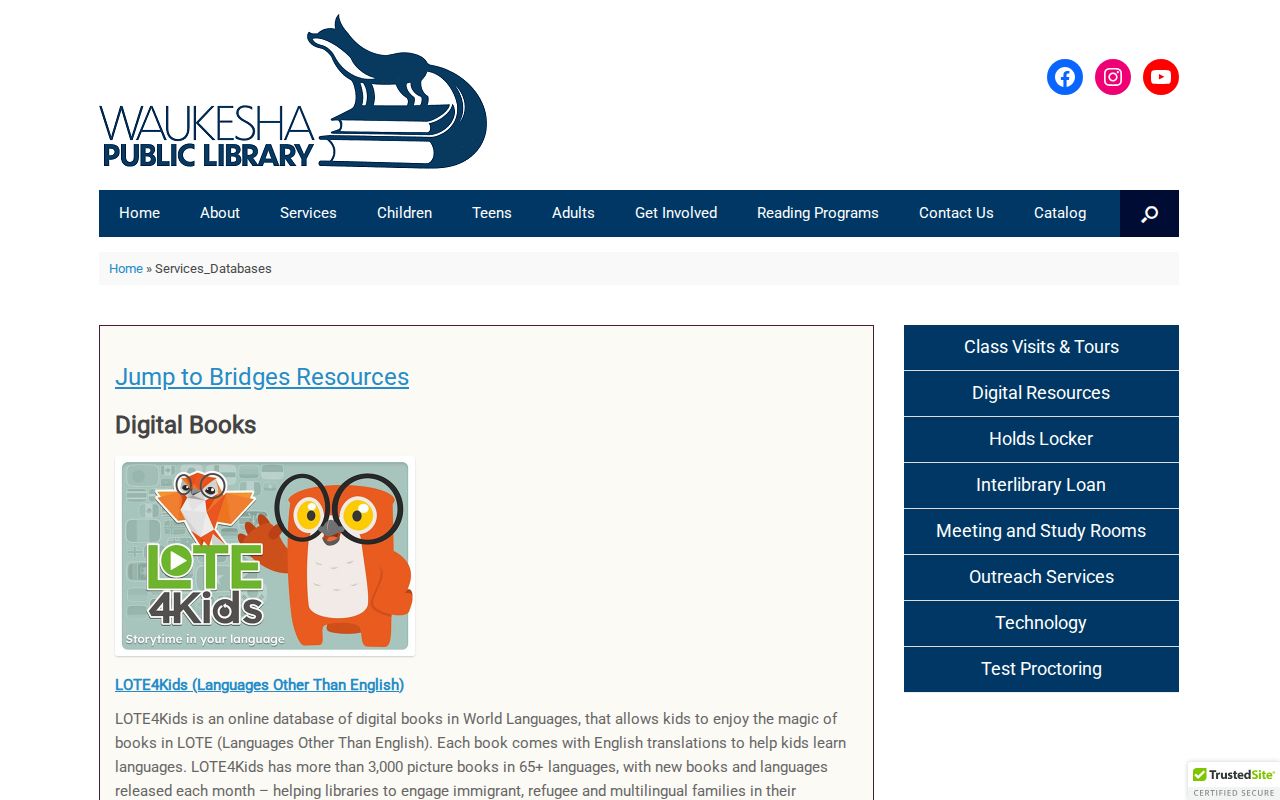
Licensed access varies, so ask the reference desk which sources work from home and which require a library visit.
Read a Waukesha Directory Entry
A historical entry is an indexed household clue. It can combine surname, given name, spouse, address, occupation, employer, widow status, and shortened street or work terms. The exact local abbreviation key was not found online, so copy the key from the opening pages rather than expanding symbols by guess.
| Name | Surname and given name, often the main listed adult |
|---|---|
| Spouse | May appear in parentheses or a separate line |
| Address | House number and abbreviated street |
| Occupation | Work or employer when the publisher supplied it |
| Status note | Widow or another relationship notation |
- Criss-cross directory
- An address-first section arranged by street and number.
- Householder index
- A list centered on the primary named household contact.
- Abbreviation key
- The volume’s own guide to compressed words and symbols.
Initials, OCR errors, and phonetic variants can split one person into several apparent names. Wisconsin Historical Society phonetic search deliberately returns sound-alike forms. Test the address, spouse, occupation, lot, and date together.
Waukesha Reverse Directory Gaps
A standard city directory starts with a name. A reverse or criss-cross section starts with a street and house number. WCHSM lists some county telephone books, with the earliest Waukesha City book dated 1917, but neither WCHSM nor the library posts a complete reverse-directory run.
Use a fallback chain. Ask both local desks about the exact year. Search the street in an alphabetical index when available, then compare telephone books, assessment rolls, maps, and microfilm. Never claim continuous coverage from the broad “1890-present” directory statement. It describes holdings, not proof that each year or each publisher survives.
Map Waukesha Directory Addresses
Sanborn fire-insurance maps cited in the City survey cover 1884, 1890, 1895, 1901, 1911, 1917, 1922, 1929, and a 1929 edition updated to 1949. The Wisconsin Historical Society archives holds the maps and plat material. A sheet shows footprint, building material, use, stories, and lot context, not a full list of residents.
Pair a directory address with the map year nearest it. Then compare City assessment rolls held by WCHSM for 1896 through 1940, 1950, 1960, and 1970, with gaps. The map tests whether the building existed and how it changed; the roll adds an owner and value for selected years.
One Waukesha House File
The City historic survey shows how a directory clue grows into a reliable local file. Its 207 N. James Street research identifies George Lyons and Frank Buchan and cites directories, Sanborn maps, tax rolls, permits, newspapers, owner information, and a building date. No single source carries the whole story.
This comparison is the key interest of Waukesha city directories. A directory can suggest residence and occupation. A deed shows a title transaction. A permit identifies a project role. A tax roll names an assessed owner. A newspaper or obituary supplies personal context. Agreement across dates is more useful than forcing every source to mean “resident.” For current address-keyed parcel work, use the Waukesha street directory.
Extend Waukesha Directory Names
WCHSM holds obituaries from 1859 to the present, along with marriage material, naturalization records, cemetery transcriptions, school records, family papers, and organizational files. Its census holdings include territorial years 1838, 1840, 1842, and 1846; state censuses from 1855 through 1895; and federal schedules for 1850 through 1870 with township gaps.
The Wisconsin Historical Society family-history search adds digitized newspapers, property files, historic architecture records, and pre-1907 vital indexes. The captured search page shows its collection categories and phonetic option.

Use sound-alike matches cautiously, then return to the address, spouse, occupation, and year to separate people with similar names.
Trace Waukesha Families by Year
A city directory becomes much stronger in a sequence. Follow a name across nearby editions, note moves and work changes, then compare each finding with a census, assessment roll, obituary, or deed.
- Find the earliest likely entry and copy the full line plus its volume year.
- Check the prior and next available editions for moves, spelling changes, or a new spouse note.
- Use an address-first section, if held, to inspect the street and nearby names.
- Pair directory dates with territorial, state, and federal census holdings.
- Test disappearance with obituaries, cemetery records, marriage sources, newspapers, or a later address.
A missing entry can mean death, relocation, omission, or a person who was never listed. WCHSM’s obituary files from 1859 onward and Prairie Home Cemetery staff can help distinguish those paths.